The Mudroom Makeover: Designing a High-Traffic Entry That Stays Elegant Despite the British Weather
The mudroom is one of the busiest spaces in a home, particularly in the UK, where rain, wind and mud are a constant part of daily life. It is a practical zone, a transition space and often the first impression of your home’s organisation. Yet mudrooms are frequently overlooked when it comes to style, leaving them cluttered, uninspiring and chaotic.
A well-designed mudroom combines practicality with elegance, creating a space that can withstand heavy use while looking calm and considered. This guide explores how to plan, organise and style a mudroom that is as functional as it is beautiful.
Assess Your Space and Workflow
The first step in a mudroom makeover is understanding how the space will be used. Consider who will be using it and how. Are there children coming home from school with wet coats and shoes? Are dogs frequently coming in from walks? Will laundry or sports equipment need to be stored here? Mapping out the flow helps determine the necessary storage, seating and surfaces.
Measure your space carefully and think about zones for shoes, coats, bags and accessories. Knowing how the space is used allows you to create systems that are logical and keep clutter under control.
Prioritise Durable Materials
Mudrooms endure heavy traffic and exposure to wet and muddy conditions. Choosing durable yet attractive materials is essential. Flooring should be water resistant, easy to clean and hard wearing. Tiles, natural stone or sealed hardwood are excellent options. Add rugs or runners that can be washed regularly to soften the space while protecting the floor.
Walls and cabinetry also need resilience. Painted timber, laminate finishes or high-quality veneers handle knocks and scuffs well. Waterproof or wipeable surfaces near wet zones ensure the space remains elegant even in inclement weather.
Smart Storage Solutions

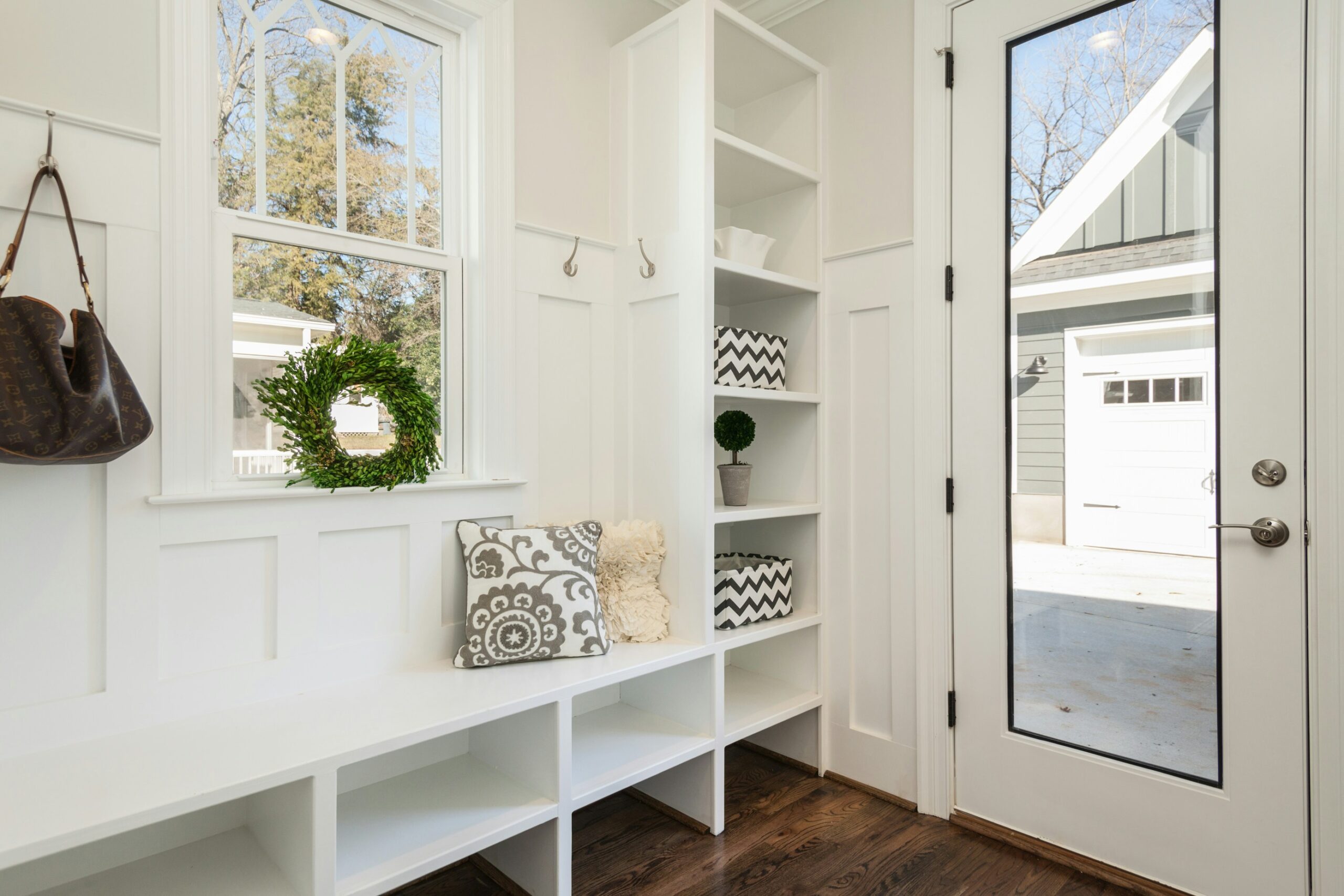
Storage is the cornerstone of an organised mudroom. Open cubbies, hooks and shelves provide accessible places for everyday items, while closed cupboards hide clutter from view. Consider a combination of both for balance.
Hooks at adult and child height make it easy to hang coats and bags quickly. Bench seating with under storage allows shoes to be neatly stowed while providing a place to sit and remove footwear. Drawers or baskets can store gloves, hats and scarves for easy access in winter.
Using uniform baskets, boxes or containers in natural materials such as woven rattan or wooden crates creates visual cohesion while keeping items tidy.
Create Zones for Functionality
A mudroom works best when it is organised into distinct zones. A wet zone for coats, boots and umbrellas can be located near the door, while a dry zone for bags, keys and mail sits slightly further inside. A seating zone encourages users to remove footwear comfortably and adds a pause point between outdoors and indoors.
Zoning keeps the mudroom efficient and visually calm, allowing each function to coexist without the space feeling overwhelming.
Lighting for Elegance and Practicality
Good lighting is key in a high-traffic area. Natural light is ideal, so if possible, position windows or frosted glass panels near the entry. For darker mornings or evenings, layer overhead lights with wall sconces or table lamps to ensure the space is well illuminated.
Lighting should be both functional and flattering. Warm white LEDs create an inviting glow while ensuring users can see what they are doing. Consider lights with dimming options to adjust mood without sacrificing visibility.
Add Seating and Surfaces
A mudroom is more comfortable and usable when seating and surfaces are incorporated. A bench allows shoes to be removed without balancing on one leg, while a console table or shelf provides a place to drop keys, bags or mail. Durable surfaces such as stone, treated wood or lacquered finishes combine practicality with style.
If space allows, consider a mirror above a console. It adds depth, helps users check their appearance before leaving the house, and reflects light to make the space feel brighter and more open.
Introduce Natural Materials and Warmth

Wood, stone, leather and woven textiles add warmth and sophistication to a mudroom. Wooden benches or shelves bring a natural element, while woven baskets or mats introduce texture. A leather ottoman or cushion can add both comfort and style.
Using natural materials ensures the space feels inviting even though it is designed for utility. The aim is to create a mudroom that supports daily life without looking purely functional or sterile.
Keep it Organised with Daily Habits
Even the most elegant mudroom can become chaotic without maintenance. Encourage simple daily habits such as putting shoes away, hanging coats and clearing surfaces at the end of the day. Assign zones for each family member so everyone knows where their belongings belong.
Weekly resets, such as wiping surfaces, shaking out rugs and sorting storage baskets, keep the space functioning smoothly and looking polished.
Seasonal Adjustments
Mudrooms change with the seasons. In winter, additional hooks or baskets for hats, scarves and gloves may be required. Summer may bring sports gear, garden tools or wet umbrellas. Adapting the storage to seasonal needs ensures the mudroom remains practical without sacrificing style.
Consider rotating decorative elements or textiles seasonally. A wool runner in winter can be swapped for a lighter cotton mat in summer, keeping the space fresh and functional throughout the year.
Styling for Practical Elegance
Elegance in a mudroom comes from consistency and attention to detail. Choose a neutral colour palette for cabinetry and walls, and add accents through baskets, rugs or textiles. Uniform storage containers, coordinated hooks and matching seating create visual harmony.
Display a few decorative items sparingly, such as a small plant, framed artwork or a vase with seasonal flowers. Avoid overcrowding the surfaces; the goal is to combine beauty with function.
Final Thoughts
A mudroom is one of the most practical spaces in the home, yet with careful design it can also be one of the most stylish. By combining durable materials, smart storage, thoughtful lighting and natural textures, you create a space that withstands daily use while feeling calm and elegant.
Investing in organisation, zones, and finishing touches ensures that your mudroom supports everyday life without visual chaos. When done well, it becomes a welcoming transition space, a reflection of the home’s style and a practical sanctuary against the challenges of British weather.